
Book Notes & Review
A closer look at this book, including key ideas, highlights, and personal observations, along with an overall rating and topic tags.
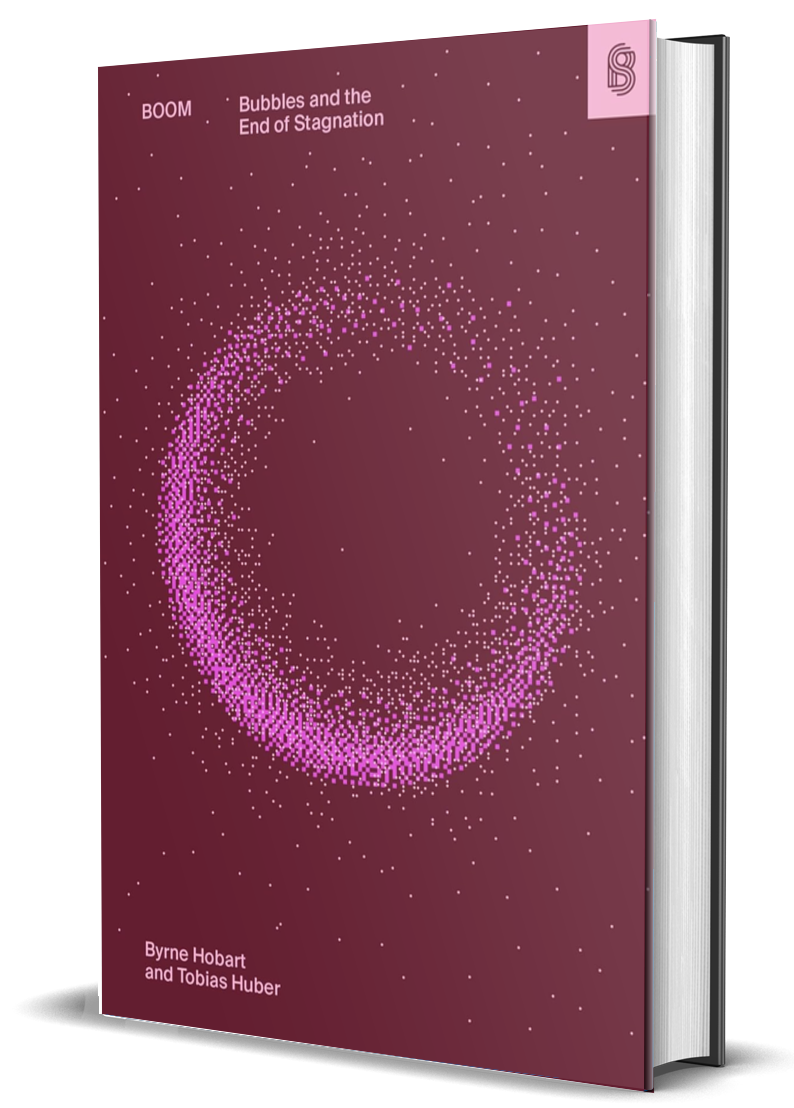
Boom: Bubbles and the End of Stagnation
Byrne Hobart , Tobias Huber
Economics - Business - History - Science - Leadership
Book Rating: 3.83
Boom explores why technological progress once moved at extraordinary speed — from the atomic age to the Moon landing — and why innovation today feels slower, more cautious, and increasingly incremental. Despite greater resources and knowledge, wage growth has stalled, inequality has risen, and scientific breakthroughs appear harder to achieve.
The authors examine this problem through a series of case studies spanning the past century, including the Manhattan Project, the Apollo program, fracking, and Bitcoin. By analyzing these moments of rapid progress, they show that major breakthroughs often emerge from small, focused groups with a shared mission, abundant funding, and surprisingly limited accountability.
A central argument of the book is that financial bubbles, commonly viewed as reckless or destructive, have historically played a crucial role in enabling transformative innovation. Rather than being purely harmful, bubbles create the conditions necessary for ambitious experimentation and large-scale risk-taking.
Drawing from economics, philosophy, and history, Boom offers a framework for overcoming modern stagnation. It argues that reducing collective risk aversion, overfunding experimental efforts, and organizing high-agency individuals around bold missions are essential to reigniting progress. The book presents an optimistic view of the future — and a case for how extraordinary advances can happen again.